
By publishing date or content age
Want to see how your content performs over time? Grouping by publishing date or content age helps you spot trends, identify decaying content, and understand which topics stay evergreen versus which ones fade. It's also useful for evaluating annual performance, production output, and efficacy of your content program as it grows (or shrinks).
Use Content Groups when your URLs follow a date-based structure.
Group by URL patterns with Content Groups
If your site organizes content by date in the URL structure, Content Groups make it easy to track by month or year. This works well for blogs, news sites, and archives where the URL itself tells you when something was published.
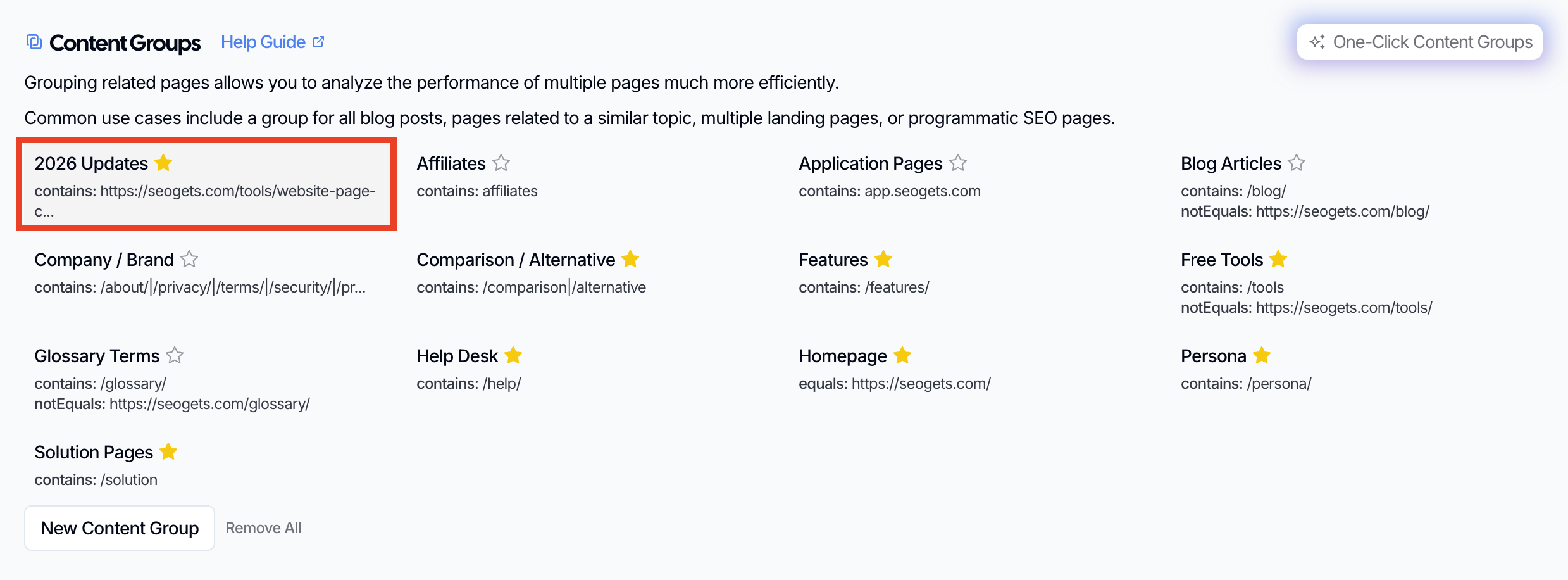
Common date-based URL patterns
Here are patterns you can use to group content by date or age:
Year-based folders:
/2024/,/2023/,/2022/Blog with year subfolders:
/blog/2024/,/blog/2023/News or archives sections:
/news/[date],/archives/[date]Date patterns with regex: Match multiple years at once with a pattern like
/blog/202[0-9]/
Set these up the same way you'd create any Content Group—navigate to Settings, scroll to Content Groups, and define your pattern using either a simple match or regex.
For the full setup steps, see Content groups.
Grouping when URLs don't include the date
If your URLs don't include time/date information, you can still create a content group by exporting a list URLs with publishing dates (or last updated dates) and then use this information to build content groups. When building content groups this way, be sure to add a clear identifier in the title.
What to look for after you've grouped your content
Once your groups are live, filter your dashboard or reports to review performance. Here are some patterns worth watching:
Year-over-year decay: Compare older year folders (like
/2022/) against newer ones to spot content that's losing visibility and may need updating.New vs. established content: Group recently published URLs separately to see how fresh content performs compared to your established library.
Content volume and impact: Review high-volume content production years vs low and moderate production years. Did publishing more content have the expected impact?
What to do next
After grouping by date or age, you can take action based on what you find. These guides can help:
Group and track content performance — overview of Content Groups and Topic Clusters